By 2026, Machu Picchu remains the undisputed crown jewel of South American travel, but the method of arrival has become a defining choice for modern adventurers. As noted in the guide to popular tours to Machu Picchu, you are essentially choosing between two distinct archetypes of exploration: the Classic Inca Trail and the Salkantay Trek.
Deciding between them isn’t just about the scenery; it’s about deciding whether you want to walk through the pages of history or test your limits against the raw power of the Andes.
The Classic Inca Trail: The Prestige of the Sun Gate
The 4-day Classic Inca Trail is the only route that allows you to enter the citadel through the Inti Punku (Sun Gate) at dawn. For many, this is the ultimate “bucket list” moment—seeing the ruins slowly emerge from the mist as the first light hits the stone.
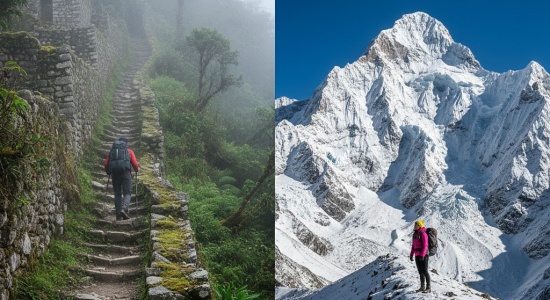
- The Experience: This is a journey through time. You aren’t just hiking; you are walking on original Inca paving stones, passing through secondary ruins like Sayacmarca and Wiñay Wayna that are inaccessible by any other means.
- The Challenge: The primary obstacle is “Dead Woman’s Pass” (4,215m / 13,828ft). While lower than the Salkantay Pass, the thousands of steep stone stairs can be punishing on the knees.
- The Catch: Demand is extreme. Permits are capped at 500 per day (including porters), and in 2026, you must secure your spot 6 to 8 months in advance.
The Salkantay Trek: The Alpine Powerhouse
When permits for the Inca Trail sell out—or for those who find the trail too “regulated”—the Salkantay Trek offers a wilder, more dramatic alternative. Recently named one of the top 25 treks in the world by National Geographic, it trades archeological ruins for geological giants.
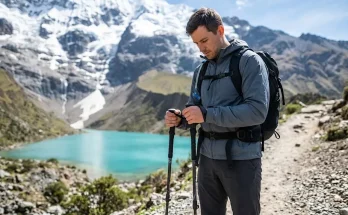
- The Experience: This is a high-altitude odyssey. You begin in the shadow of the massive Humantay Lake and cross the Salkantay Pass (4,630m / 15,190ft), surrounded by glaciers and snow-capped peaks. The second half of the trek drops into the high jungle, where you walk through coffee plantations.
- The Challenge: Salkantay is physically more demanding than the Classic Trail. The altitude is higher, the days are longer, and the weather is more volatile. You won’t enter through the Sun Gate; instead, you enter through the main gate the following morning.
- The Catch: There are no permits required, which makes it the best “last-minute” option. However, campsites can feel crowded during the peak dry season.
Which Quest is Right for You?
| Feature | Classic Inca Trail | Salkantay Trek |
|---|---|---|
| Primary Draw | Entering through the Sun Gate | Massive glacial landscapes |
| Historical Sites | High (exclusive ruins) | Low (focus is on nature) |
| Max Altitude | 4,215m (13,828 ft) | 4,630m (15,190 ft) |
| Daily Routine | Structured campsites/Porters | More flexible/Mule support |
| Planning Horizon | 6-8 months in advance | 1-2 weeks in advance |
The “Third Way”: The Short Inca Trail
For those who want the Sun Gate experience without the 4-day commitment, the 2-day Short Inca Trail is a strategic hybrid. You take the train to Km 104, hike for about 6 hours to Wiñay Wayna, and join the final leg of the trail to enter Machu Picchu through the Sun Gate in the late afternoon.
Conclusion
Choosing your tour is about matching your personal “why” to the landscape.
If your dream is to trace the footsteps of royalty and see the ruins through the historic Sun Gate, the Classic Inca Trail is non-negotiable. But if you want to stand in the presence of ancient glaciers and feel the raw scale of the Andes, the Salkantay Trek will provide an adventure that history books cannot replicate.