When travelers request a tour to Machu Picchu, they often focus on the destination while overlooking the emotional architecture of the journey itself. The market has evolved to offer two distinct extremes for those seeking an alternative to the crowded Classic Inca Trail: the Lares Trek and the Inca Jungle.
One is a deep dive into the living history of the Andes; the other is a multi-sport adrenaline rush. Choosing between them requires an honest assessment of your travel purpose: are you looking to connect with a culture that has remained unchanged for centuries, or are you looking to conquer the landscape through physical momentum?
The Lares Trek: The “Weaving Path” of Cultural Depth 🧶
The Lares Trek is frequently requested by travelers who value human connection over physical records. Unlike the more isolated Salkantay route, Lares winds through high-altitude valleys populated by traditional Quechua-speaking communities.
- Authentic Interaction: The hallmark of this tour is passing through villages where the main industry is still traditional textile weaving and alpaca herding. You aren’t just a spectator; you are walking through a “living museum.”
- The Thermal Recovery: A strategic highlight of the Lares route is the visit to the natural hot springs. This offers a moment of reflection and physical recuperation that is absent from the more grueling treks.
Lares is for the traveler who wants to remember the face of the weaver they met or the taste of a local meal more than the total kilometers covered. It is a contemplative journey that prepares the mind for the spiritual weight of Machu Picchu.
The Inca Jungle: Adrenaline and Social Momentum 🚲
On the opposite end of the spectrum is the Inca Jungle tour, a favorite among younger travelers and solo backpackers. This is the most dynamic and social way to reach the citadel, trading traditional hiking for a variety of outdoor sports.
The journey begins with a massive downhill mountain biking descent from the Malaga Pass (4,316m) into the cloud forest. Depending on the operator, the tour also integrates white-water rafting on the Urubamba River and zip-lining across mountain canyons.
The Inca Jungle is designed for high interaction. The hostels, the shared activities, and the fast-paced nature of the trip foster quick friendships. It is less about quiet contemplation and more about shared high-energy experiences.
Strategic Comparison: Which Purpose Fits Your Profile? 📋
To make an informed decision, the traveler must audit their own “Experience Priorities.”
| Feature | Lares Trek | Inca Jungle |
|---|---|---|
| Primary Vibe | Contemplative & Cultural | Energetic & Social |
| Physical Focus | Steady Hiking | Biking, Rafting, Zip-lining |
| Accommodation | High-altitude Tents | Guesthouses / Hostels |
| Best For… | Photographers & Culture-seekers | Adventure-seekers & Backpackers |
The Impact on the Final Arrival 🌅
The tour you choose colors your perception of Machu Picchu when you finally stand at the Sun Gate or the main entrance.
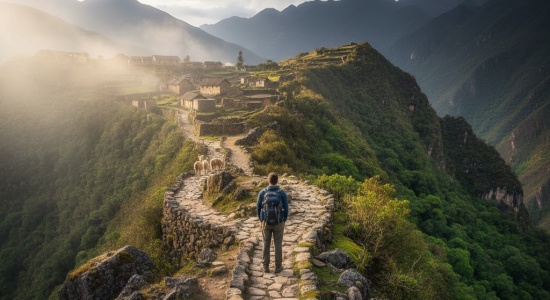
- The Lares Perspective: You arrive with a sense of the people who built and maintained the Inca Empire’s descendants. The citadel feels like the culmination of a vast, living cultural tapestry.
- The Inca Jungle Perspective: You arrive with the momentum of a conquered landscape. The citadel is the “trophy” at the end of a high-speed adventure, a place of triumph and celebration with new friends.
Helping a traveler choose between Lares and the Inca Jungle is not a question of “which is better,” but “which is more meaningful to you.” If your bucket list includes a desire to understand the heart of the Andes, the Lares Trek is the strategic choice. If you want to celebrate your visit with adrenaline, checking the diverse Machu Picchu tours available will show why the Inca Jungle is the most requested route for high-energy travelers.