The answer to how many days in Cusco depends on three things: how tight your schedule is, whether Machu Picchu is on the list, and how much hiking you want to do. Most travelers land on three, five or seven days, and each length covers a different slice of the region.
This guide walks through the questions that decide the number, starting with what altitude does to your first days. Each answer is short, and together they give you a number you can defend when you start booking.
How many days in Cusco cover the main sights?
Three days is enough for the old city, the Sacred Valley and a day at Moray and Maras. That is the short version, and it works if you plan the days in a sensible order instead of packing everything together. For full itineraries for each length, day by day, that guide spells them out.
Five days adds Machu Picchu without squeezing every afternoon, and seven days gives hikers room for Humantay Lake and Rainbow Mountain. The full Cusco Tourist Ticket costs S/130 for foreign visitors and lasts ten days, so it covers all three plans.
The Sacred Valley deserves a full day on its own. Pisac gives you hillside ruins and wide valley views, and Ollantaytambo has huge terraces and original Inca streets. Both deserve more than a rushed photo stop, and Ollantaytambo is also useful for train connections, which makes the next morning easier.
Why does altitude change the answer?
Cusco sits around 3,350 meters above sea level, and your body may need time before harder mountain trips. The CDC recommends mild exercise only and no alcohol for the first 48 hours at high altitude.
So your first day should stay fairly easy: a slow walk around the Plaza de Armas, a taxi uphill to Sacsayhuamán and an early dinner. In the afternoon, San Blas makes a slower stop with small shops and cafes. Your first day is not the time for heroics, and Rainbow Mountain can wait until later in the trip.
Where does Machu Picchu fit?
On the third day in both the five and seven day plans, after the Sacred Valley has given you some altitude practice. Book the entry before you arrange anything else.
- For 2026, the Ministry of Culture set a capacity of 5,600 visitors on selected high-season dates and 4,500 on the other days.
- Tickets are sold online through the state platform, and in person at the Machupicchu Pueblo office, where up to 1,000 tickets go on sale each day for the following day.
- Check which circuit your ticket includes before you buy train tickets.
Since 1 June 2024 the citadel has been visited through three circuits that group ten routes, so not every ticket gives the same walk. The conduct rules also forbid bags larger than 40x35x20 cm, food, tripods and drones, which is worth knowing before you pack for the day.
When do you need more than five days?
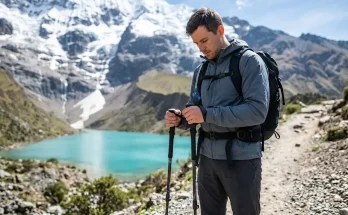
When you want the mountain outings. Humantay Lake sits around 4,200 meters, and Rainbow Mountain reaches roughly 5,200. Both are demanding because of the height, not the distance, so they work better after several days of adjustment. In the five day plan, Humantay is the last day for that reason, once your body has had four days at elevation.
With a seventh day you can leave Rainbow Mountain for last, add a recovery day for museums or San Blas, and still have a full day for Moray and Maras. If hiking is the point of the trip, add days before you add places.
What should you book first?
In this order: the Machu Picchu entry, the train, the Sacred Valley hotel if you want to sleep in Ollantaytambo, and then the day tours. Ask every tour company what the price includes, including entrance tickets and meals, and what time pickup starts. Four more questions are worth asking each company: how many travelers join a departure, whether emergency oxygen is available on mountain trips, what happens when weather changes the itinerary, and whether you can change your booking date later.
Many Humantay and Rainbow Mountain departures leave before sunrise, so a flexible plan for the day before helps. Pack water, keep the pace slow on the climb and leave room in the evening for dinner back in Cusco.