What essentials are missing from a standard Peruvian desert packing list?
Most basic online guides focus exclusively on shorts and sandals, ignoring the need for a high-quality seamless neck gaiter or bandana to shield your respiratory system from airborne dust. When a buggy slides down a steep dune bowl, fine sand is kicked up into the air, making breathing uncomfortable without a protective cloth face cover.
Polarized sunglasses with wrap-around frames are equally critical to prevent lateral wind gusts from forcing sharp quartz grains into your tear ducts during the ride. *What few travelers consider is that keeping a simple pair of spare socks stored in a zip-lock bag can save you from painful abrasions caused by trapped sand.*
How does high-altitude sun exposure impact sand trail hydration?
The Ica desert registers some of the highest UV index levels in South America due to its altitude and geographic proximity to the equator, accelerating human dehydration without the clear warning signs of heavy sweating. The dry air causes moisture to evaporate from your skin instantly, masking the true rate of fluid loss during the climb.
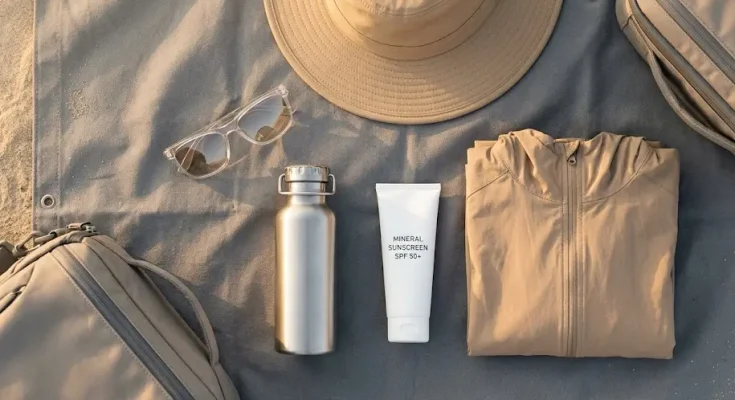
Carrying a vacuum-insulated stainless steel flask ensures your water remains cool and palatable, encouraging regular fluid intake throughout the afternoon hours.
- Broad-spectrum mineral sunscreen: Applying an SPF 50+ zinc oxide cream blocks both UVA and UVB rays effectively.
- Electrolyte replacement tablets: Adding mineral salts to your water flask restores the sodium balance lost through invisible respiration.
- UV-rated lip balm: Protecting thin lip tissue prevents deep, painful cracking caused by the hyper-arid desert wind.
Why is specific wind-resistant footwear mandatory for technical dune hiking?
Attempting to climb a sixty-degree sand slope in standard flip-flops or low-top running shoes turns into a frustrating exercise, as your feet sink deep into the loose surface, filling the shoe interior with burning hot sand. Lightweight, high-top trail boots fitted with built-in dust gaiters seal out the particles completely while providing stable ankle support.
If you plan to try sandboarding with professional bindings, wearing sturdy athletic sneakers with thick canvas uppers is required to secure the straps tightly without bruising your feet. *There is something deeply inefficient about walking barefoot over dunes exposed to the midday sun, a common mistake that typically ends in painful surface burns on the soles of your feet.*
What lens protection prevents fine sand damage to electronic camera gear?
The microscopic quartz dust floating in the desert breeze acts like fine sandpaper against premium glass lenses, permanently scratching exterior elements if left unprotected. Professional photographers use clear UV filters screwed onto the lens threads, sacrificing an inexpensive accessory to preserve the expensive primary optics underneath.
Keeping your electronic devices sealed inside heavy-duty dry bags when not actively shooting prevents sand from penetrating the internal zooming mechanisms and electronic sensor bays.
How do fluctuating day and night temperatures change your Peruvian desert packing list?
The absence of cloud cover and moisture causes the desert to lose heat rapidly as soon as the sun drops behind the coastal mountains, lowering temperatures by up to fifteen degrees Celsius in less than an hour. Packing a compact, packable down jacket or a fleece layer ensures you can enjoy the sunset views comfortably without shivering.
Evolving your **Peruvian desert packing list** through analytical preparation guarantees that the harsh environment never compromises your travel comfort. By investing in quality technical gear and protective storage systems, you protect your physical health and valuable equipment while conquering the grandest dunes of South America.