Understanding the operational mechanics behind lake tours allows travelers to distinguish between budget ticket resellers and professional, fully licensed tour agencies. Making an informed choice safeguards both your wallet and your safety on the water.
Why is a Lake Titicaca classic routes agency comparison essential for visitors?
On paper, most Puno tour agencies offer identical sounding itineraries, but the reality on the water tells a very different story.
Budget agencies often operate as middlemen, selling seats to third-party boat captains who consolidate passengers from multiple offices onto single overcrowded vessels. Professional operators maintain their own fleet or work exclusively with vetted maritime partners who adhere to strict schedules.
The core risk in selecting the cheapest tour option is losing precious hours in transit while sitting on uncomfortable wooden benches.
Comparing operators beforehand **ensures clear standards for boat comfort, group size, and safety**.
How do fast boat services compare to traditional motorboat itineraries?
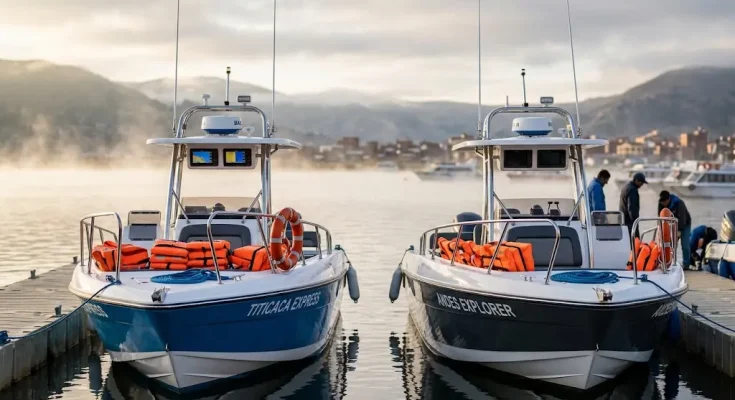
Vessel type is the single most influential variable affecting your comfort and time management during a Lake Titicaca tour.
- Traditional Slow Boats (*Lanchas Normales*): Travel at roughly 10–12 km/h, taking up to 3.5 hours to reach Taquile or Amantaní from Puno.
- Fast Speedboats (*Lanchas Rápidas*): Travel at 25–30 km/h, cutting transit times in half and leaving significantly more time for exploring the islands.
- Private Charters: Customized speedboats offering total itinerary flexibility, private guides, and isolated island landing points.
Choosing a fast boat fundamentally improves single-day excursions. Spending less time breathing diesel fumes on the water means more time exploring ancient stone trails and interacting with local artisans.
How do agency connections impact community cultural exchanges on the islands?
Ethical tour operators prioritize sustainable tourism practices that support local indigenous families directly.
- Rotating host family assignments on Amantaní to distribute tourist income equitably across the entire village.
- Employing native Quechua and Aymara guides who provide genuine historical context rather than scripted sales pitches.
- Limiting group sizes to minimize social and environmental strain on small island ecosystems.
Responsible travel choices protect indigenous heritage. Selecting a conscientious tour operator ensures that your presence actively contributes to preserving the living cultural traditions of Lake Titicaca.