¿What is the ideal pack size when packing for humantay lake trek?
Selecting the correct backpack capacity is a foundational step when packing for humantay lake trek. A daypack between 18 and 25 liters provides ample volume to house extra thermal layers, 2 liters of water, camera gear, and emergency supplies without encouraging overpacking.
Packs with built-in hip belts transfer weight to your pelvis, easing the burden on your shoulders.
A 20-liter daypack offers the optimal capacity-to-weight balance for single-day high-altitude excursions in Peru.
Using a daypack with padded waist straps keeps your load stable on steep, loose-gravel switchbacks.
¿How do you protect trail gear from unpredictable Andean rain?
Weather in the Vilcabamba mountain range shifts rapidly, with bright sunshine often giving way to hail or rain showers within minutes. Water penetrating your pack can ruin camera electronics and saturate insulating layers, creating a hypothermia risk at high elevations.
Effective weatherproofing techniques for daypacks:
- Hi-vis rain covers: Elastic pack covers that seal out rain and increase visibility on trail sections.
- Internal dry sacks: Lightweight roll-top dry bags to protect extra socks, down jackets, and passports.
- Zipped storm flaps: Ensuring all exterior zippers are tucked under protective fabric barriers.
Double-layering sensitive electronics in dry sacks guarantees protection against the heaviest mountain downpours.
¿What high-energy snacks sustain endurance during steep climbs?
High-altitude exertion burns glycogen reserves rapidly as your body works harder to transport oxygen to working muscles. Packing nutrient-dense, easily digestible snacks keeps blood sugar levels steady during the challenging climb to 4,200 meters.
Selecting compact trail nutrition
Opt for complex carbohydrates and natural sugars, such as dried coca leaves, energy gels, nut butter packets, dried mangoes, and trail mix containing almonds and dark chocolate.
Consuming small calorie boosts every 30 minutes maintains stamina far better than eating one large meal during steep ascents.
¿Why do adjustable trekking poles reduce joint strain on descents?
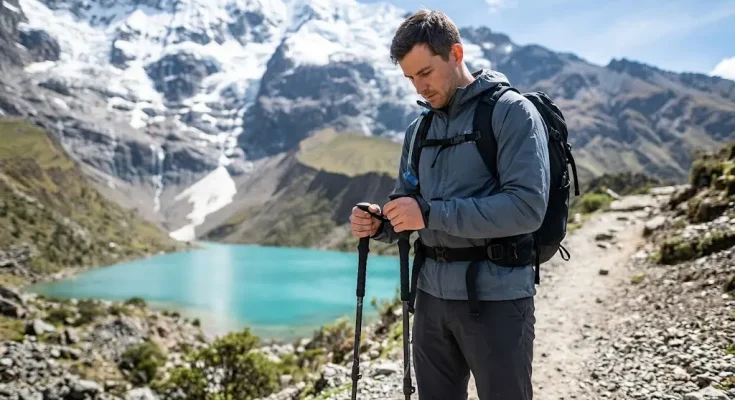
The descent from Humantay Lake follows steep, dusty paths covered in loose scree where slipping is common. Utilizing adjustable trekking poles with rubber tips provides stability and absorbs high impact forces that would otherwise stress your knees and ankles.
Trekking poles distribute workload across your upper body, improving balance on treacherous downhill sections.
Trekking poles reduce impact stress on knees by up to 25% during steep downhill mountain descents.
Using poles properly transforms slippery scree slopes into a controlled, confident descent.
¿How to avoid overpacking when packing for humantay lake trek?
Refining your strategy for packing for humantay lake trek means questioning the necessity of every single item. Resist the temptation to pack “just in case” items like heavy books, multiple camera lenses, or duplicate change of clothes.
Final pack trimming guidelines:
- Carry a single versatile insulation layer like a packable down jacket rather than multiple heavy sweaters.
- Consolidate sunblock and lip balms into travel-sized tubes to save internal pocket space.
- Limit electronics to a smartphone, power bank, and a single compact camera body.
Streamlining your daypack content ensures comfort on the trail. A light, weatherproof backpack frees you to enjoy the high-altitude trek to the fullest.