A hike on your first day in Cusco is one of two plans on the table, and the other is a slow day in the city. The city sits at about 3,350 meters, and the CDC advises mild activity and no alcohol for the first 48 hours at altitude, which is the main argument for starting slow.
Each plan buys something and costs something, and the trade is rarely obvious from a distance. This comparison sets them side by side, says who each one suits and ends with a table you can check against your own trip. Altitude affects people differently, so talk to a doctor or a travel clinic before you go. Nothing here replaces that conversation.
Plan A: a slow city day first
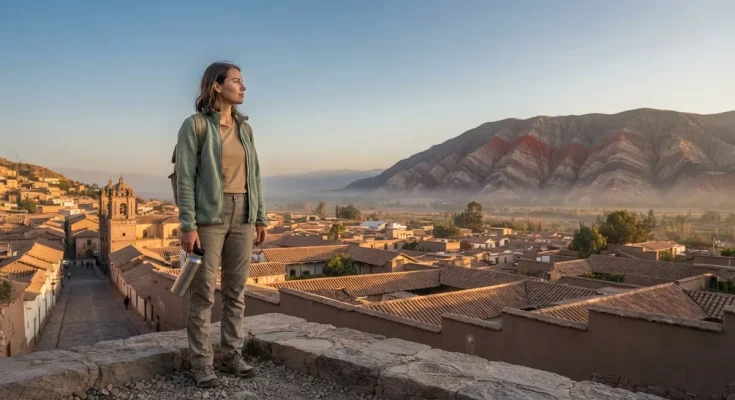
This is the gentler plan. Start at the Plaza de Armas after breakfast, walk the historic center at an unhurried pace, fit Qorikancha into the morning, and add the San Pedro Market, about 8 minutes on foot from the square, or the lanes of San Blas, the artisans’ neighborhood. If you want Sacsayhuamán before dinner, take a taxi uphill to save energy. Peru’s tourism site recommends walking slowly, climbing stairs without rushing and drinking water regularly, even when you are not thirsty.
What you gain is a day in which little can go wrong. What you give up is time, because the hardest outings move to day three or later, when you have had two nights to see how you feel. A traveler with only three days gets less out of this plan, since the demanding excursions simply do not fit. It does not mean a trip without big days: one 5 day plan puts the city on day one, the Sacred Valley on day two, Machu Picchu on day three, a lighter day in Cusco on day four and Humantay Lake on day five.
Plan B: a hike on your first day in Cusco
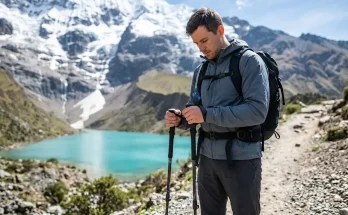
Plan B sends you up a mountain within hours of landing. Humantay Lake is a short hike on paper, but at about 4,200 meters the altitude is what makes it demanding, and Rainbow Mountain reaches about 5,200 meters. Both tours involve pickups before sunrise and a bag with enough water. The CDC says any unacclimatized traveler going to a sleeping altitude of 2,450 meters or higher is at risk, and that training and physical fitness do not affect that risk. Some travelers still pick this plan to save a day on a short trip, which is an understandable wish. Whether it is a sensible risk for you is a question for your doctor.
Arriving adapted is no exemption: the CDC adds that previously acclimatized travelers are at risk when they move higher, especially with a gain of 600 to 900 meters. One 7 day itinerary puts Humantay Lake on day five, an easy day on day six and Rainbow Mountain on day seven. Questions worth asking before you book include whether emergency oxygen is available, what time the pickup is and how big the group is. Whichever plan you choose, ask the operator what happens if a traveler feels unwell.
What to check at the end of day one
Whichever plan you pick, the first evening is a checkpoint. The CDC says symptoms usually begin 2 to 12 hours after arrival, often during or after the first night, and the usual picture is a headache with loss of appetite, dizziness, fatigue or nausea. It resembles a hangover and generally clears within 12 to 48 hours if you do not go higher.
If you feel fine, day two can add distance without adding climb. If you do not, the NHS advises telling your companions, resting at the same altitude and drinking enough water. Peru’s tourism site notes that some hotels and health centers offer supplemental oxygen. Get medical help immediately for confusion, trouble with balance or breathlessness while resting.
When each plan fits
| Situation | Better fit |
|---|---|
| You are arriving from low altitude | Plan A |
| You have three days in total | Plan A, with the city, the Sacred Valley, Moray and Maras |
| Hiking is the reason for the trip | Plan A first, then the big hike later in the stay |
| You feel unwell on day one | Rest at the same altitude, as the NHS advises, and do not go higher |
| You have had altitude sickness before | Plan A, after a talk with a doctor or travel clinic |
| You are already adapted to altitude | Ask a doctor whether Plan B suits you |
The NHS says mild symptoms usually improve within 1 to 3 days, which can swallow the days a rushed start was meant to save. Seven days leave room for both plans, in the right order: the city first, then the mountain. If you are unsure, start with Plan A: it can be followed by Plan B later in the trip, while the reverse order gives up the buffer.